How to put together outfits: principles for combining clothes and modern style rules
Why do two pieces you like on their own look wrong together? Why does the same jacket look natural with one pair of trousers and heavy with another? And do you really have to follow the three-color rule, match your bag to your shoes, and balance a voluminous top with a slimmer bottom?
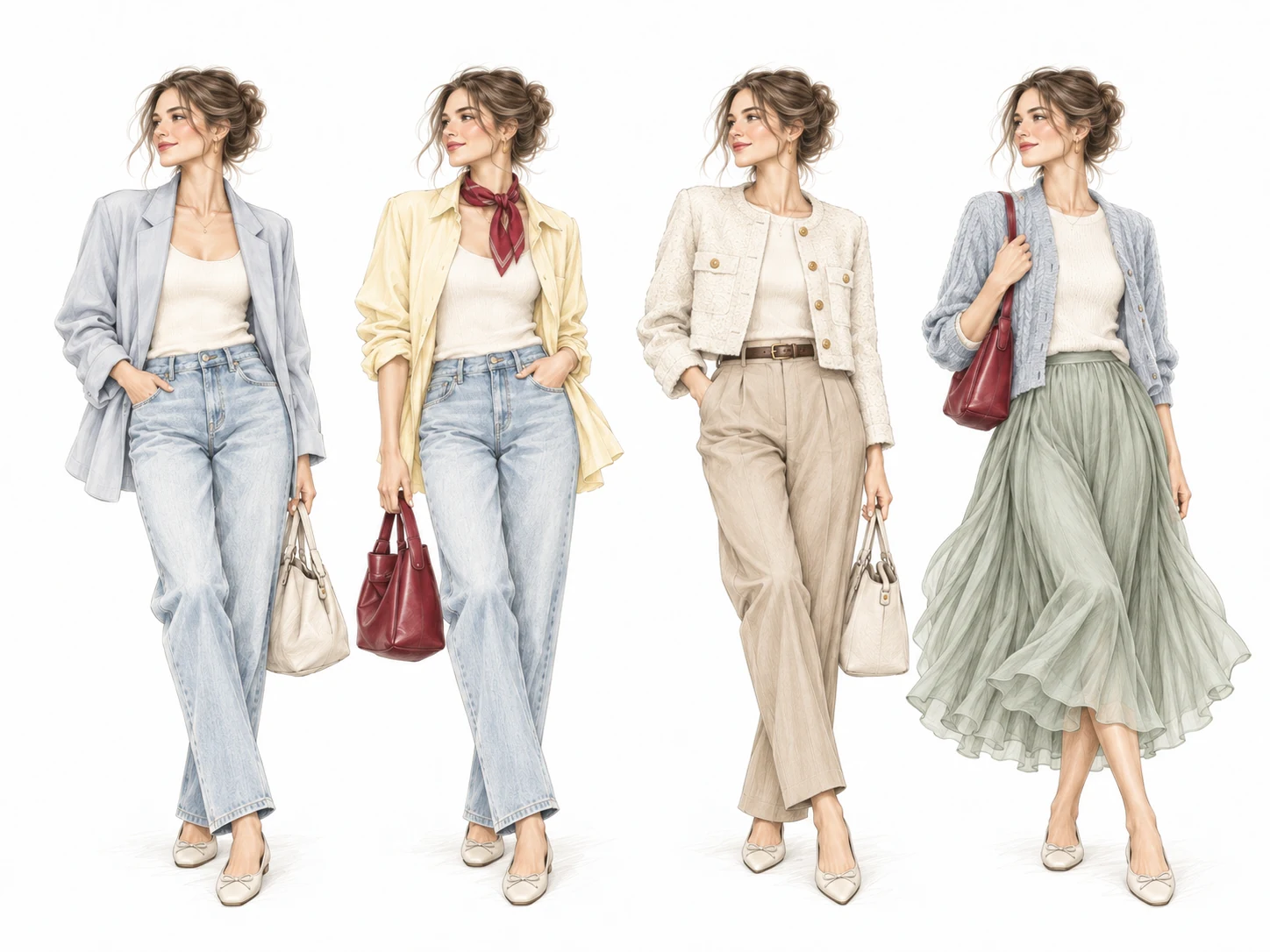
Over the last hundred years, the way we put outfits together has changed a lot. Many rules that were once part of strict etiquette are now optional styling techniques. At the same time, new systems appeared: color analysis, Kibbe types, the rule of thirds, capsules, outfit formulas, working with texture, and dozens of methods from different style cultures.
In short: there's no universal formula for a good outfit. But there are principles that help you manage color, proportion, volume, texture, and accents. Use them as tools: try a technique, look at the result, and keep what actually works for your features, your wardrobe, and your life.
This article covers where the familiar style rules came from, which principles are used today, and how to apply them to your own pieces in practice.
If you'd like to skip the history and go straight to the main principles, click here → The main principles of building outfits.
From strict rules to personal style: how our approach to clothing has changed
Today the idea of dressing "correctly" is much looser: you can mix gold and silver, wear white in winter, pair sneakers with a suit, and build head-to-toe volume. It wasn't always this way.
The 19th to mid-20th century: clothing as a system of rules
In the 19th and first half of the 20th centuries, clothing was regulated by social norms far more tightly. There were separate rules for age, marital status, time of day, and city versus country life.
In Victorian England, mourning was regulated in especially fine detail. A widow could be expected to wear mourning dress for up to two years, with distinct stages: from a strict black wardrobe with crape — the matte, crimped fabric characteristic of deep mourning — to a gradual return of gray, white, and mauve. How long mourning lasted depended even on the degree of kinship. In the early 20th century, everyday details were regulated just as precisely: etiquette books explained when a woman should wear a hat and gloves and when she could take them off.
In the US, there was the famous rule against "wearing white after Labor Day." Its origin is tied less to aesthetics than to social difference: white summer clothing was associated with wealthy people who spent the season at resorts. Today even the Emily Post Institute calls the rule outdated.
In British menswear there was the rule no brown in town: brown shoes were considered appropriate for country life but not for business London. It's striking how long this norm survived: as late as 2016, the UK's Social Mobility Commission noted cases where brown shoes could count against a candidate interviewing at an investment bank.
Women's fashion in the 1950s had its own strict rules for coordinating accessories. Early in the decade a bag was meant to match the shoes; later, a fully coordinated ensemble was the ideal — shoes, bag, gloves, hat, belt, and scarf all coordinated with one another. Stockings were considered a required part of a "respectable" city wardrobe too: bare legs in an office or formal setting were seen as inappropriate for a long time. The same logic covered the once-common ban on mixing gold and silver jewelry — though, unlike the rules about shoes, bag, or stockings, its origin and exact dating are harder to confirm, and it probably existed more as an unwritten norm.
In other words, the rule came first, and a person's task was not to break it.
The mid-20th century: fashion sets the rules
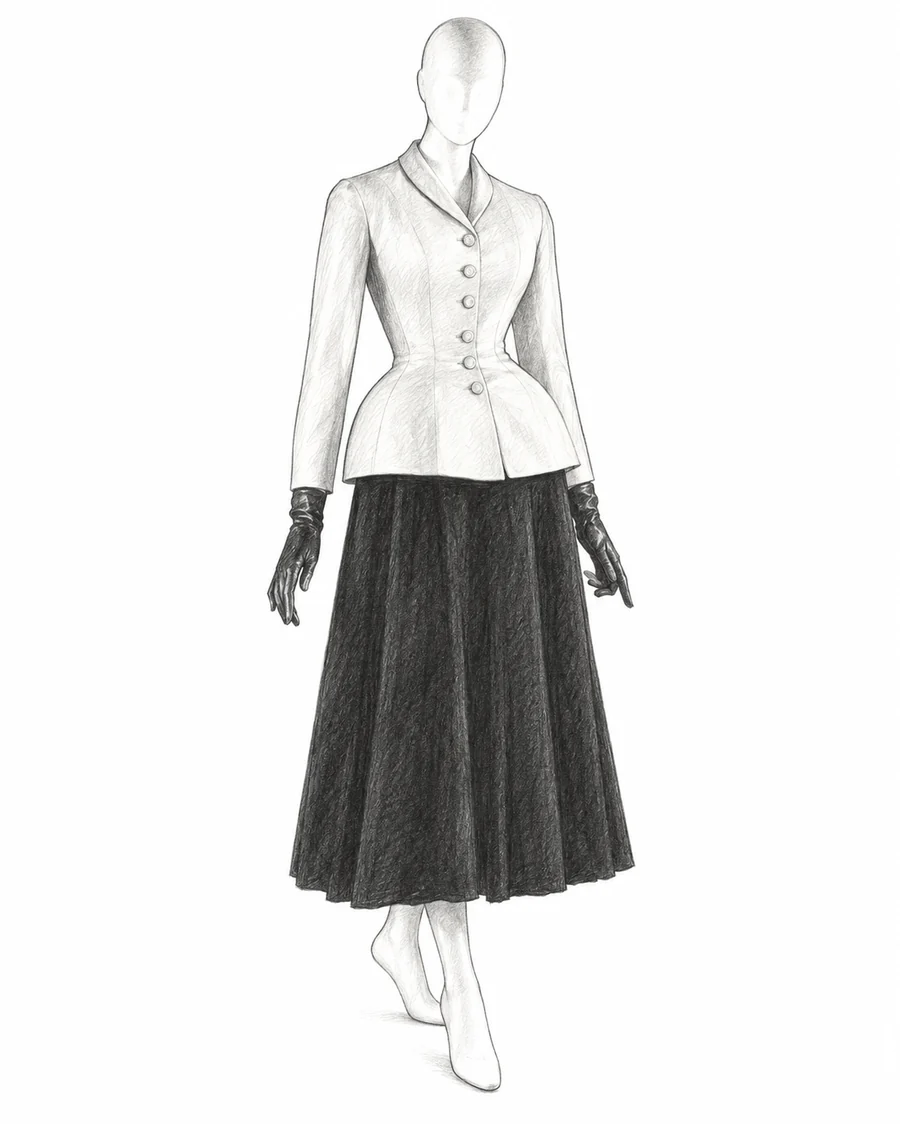
By the mid-20th century, fashion houses and magazines increasingly replaced etiquette as the main arbiters. There were fewer rigid etiquette rules, but the principle barely changed: there was still a fashion ideal you were meant to follow.
A good example is Christian Dior's New Look, presented in 1947. His famous Bar suit embodied the new silhouette ideal especially clearly: rounded shoulders, a narrow waist, and a long, full skirt. The New Look dictated not a single fashionable piece but almost the entire outfit — from shaping underwear and clothing proportions to accessories and a hat. Vogue and Harper's Bazaar promoted this complete silhouette as the new fashion ideal, and mass-market ready-to-wear adapted it for everyday wardrobes.
The source of the fashion ideal changed — the fashion house and the magazine replaced etiquette — but the logic stayed similar: there was a "correct" silhouette for the season that you were meant to reproduce.
The 1960s–1990s: breaking the rules becomes a style
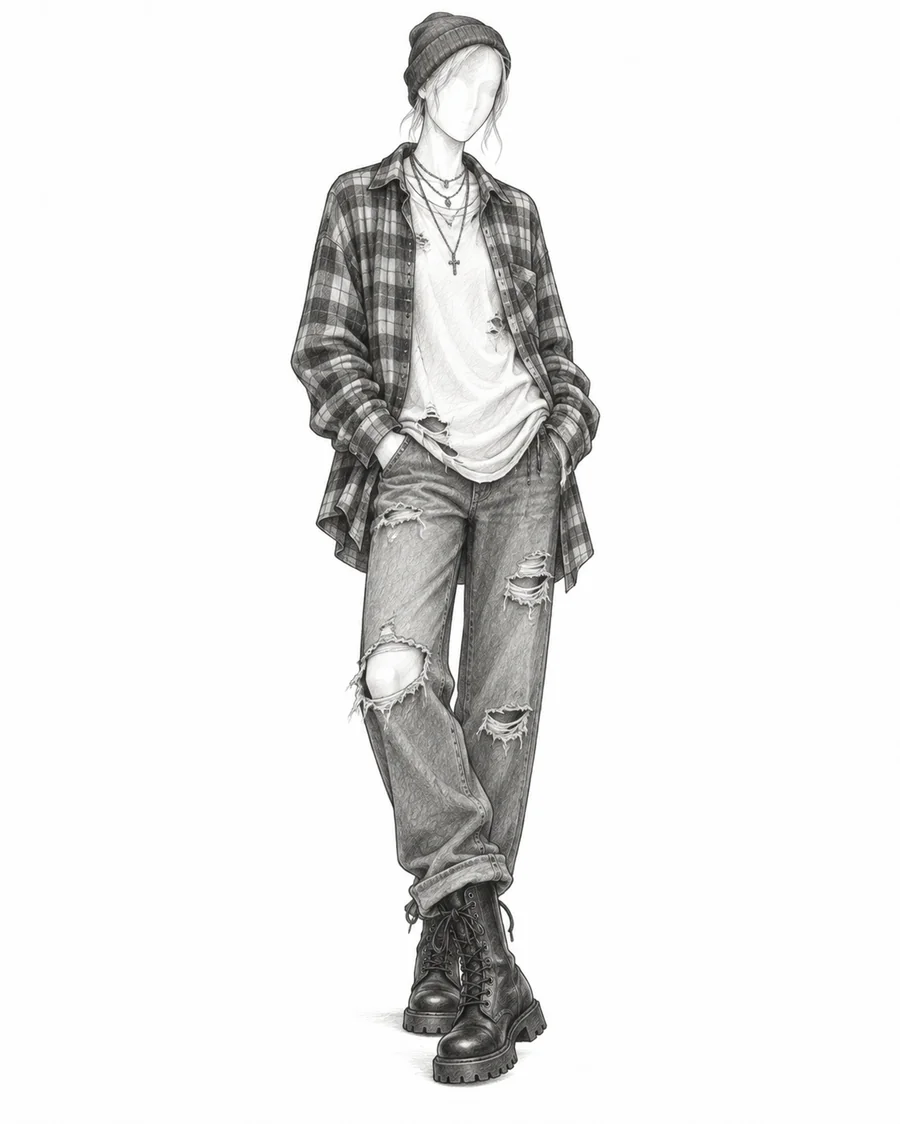
Subcultures began to change this model. Mods, hippies, punks, and later grunge used clothing not to observe the norm but, more and more, to break it. Punk turned "bad taste" into a deliberate statement, jeans moved beyond workwear, sneakers beyond sport, and the line between formal and casual gradually blurred.
Two moments from the 1990s show this shift especially well. In late 1992, Marc Jacobs brought grunge — flannel shirts, knit beanies, and thrift-store pieces — onto the Perry Ellis runway. The collection cost him his job, but it helped legitimize street aesthetics as high fashion.
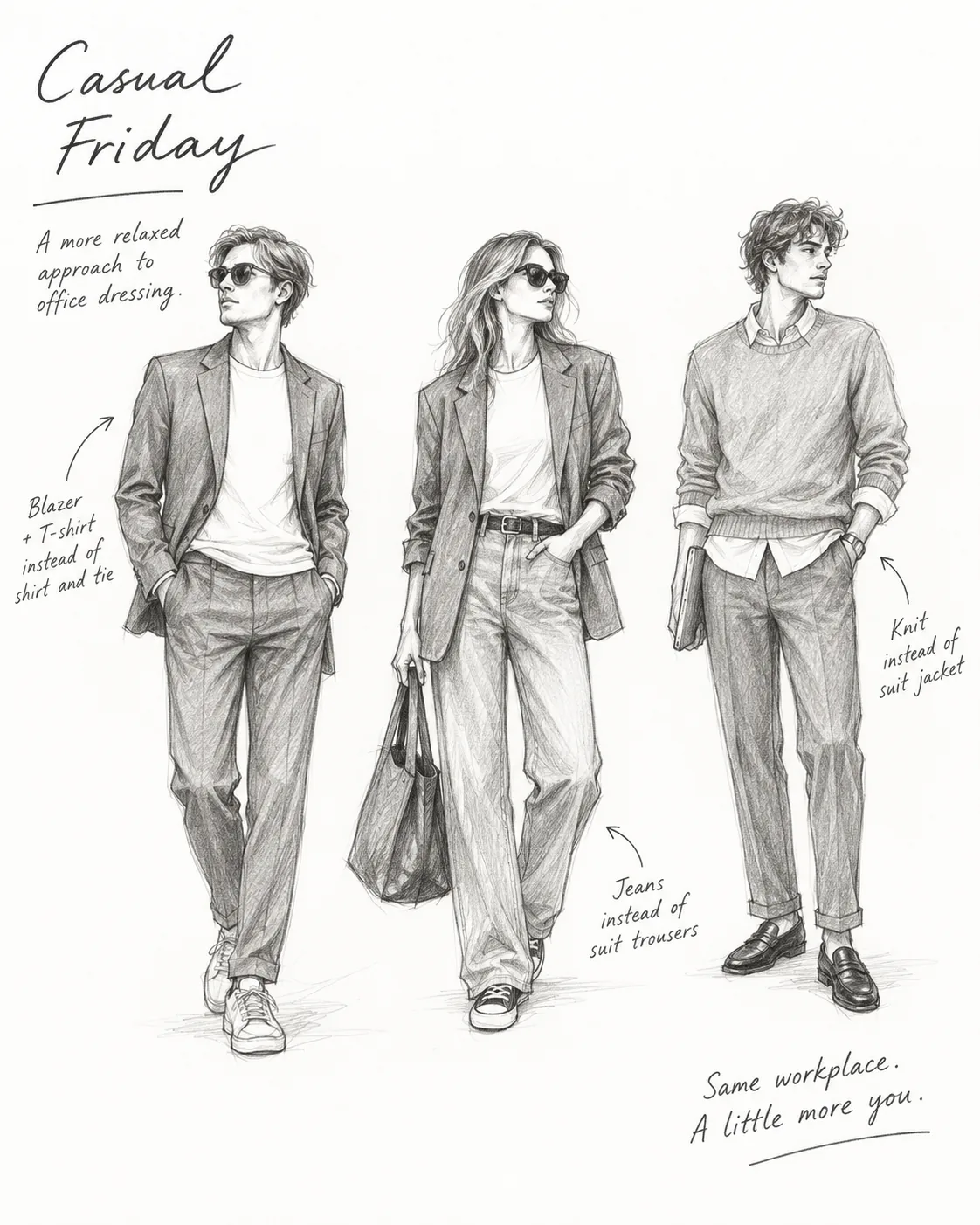
That same year, Levi's mailed its A Guide to Casual Businesswear to roughly 25,000 HR departments at American companies, while promoting Dockers — a line of khakis and other more casual office clothing. By mid-decade, casual Friday was almost the norm; the practice itself traced back to the Hawaiian Aloha Fridays of the 1960s. Tellingly, the looser office dress code spread not only alongside cultural change but thanks to brand marketing that benefited from people wearing less formal clothes to work.
The internet: from one canon to thousands of aesthetics
The next big shift came in the digital age — what changed was where people took their cues from. In 2005, Scott Schuman launched The Sartorialist: fashion inspiration now came not only from runways and fashion magazines but from ordinary people on the street. Lookbook.nu, launched in 2008, turned this into a participatory social platform: users posted their own outfits and voted on others'. Pinterest brought another tool that had been especially typical of professional work with visual references — the inspiration board — to a mass audience.
Instagram put influencers front and center, and in the 2020s TikTok fractured the fashion conversation further into aesthetics and microtrends. Instead of one dominant fashion direction, quiet luxury, cottagecore, clean girl, gorpcore, Y2K, old money, balletcore, and dozens of other aesthetics now coexist — some of them gaining and losing popularity within weeks or months.
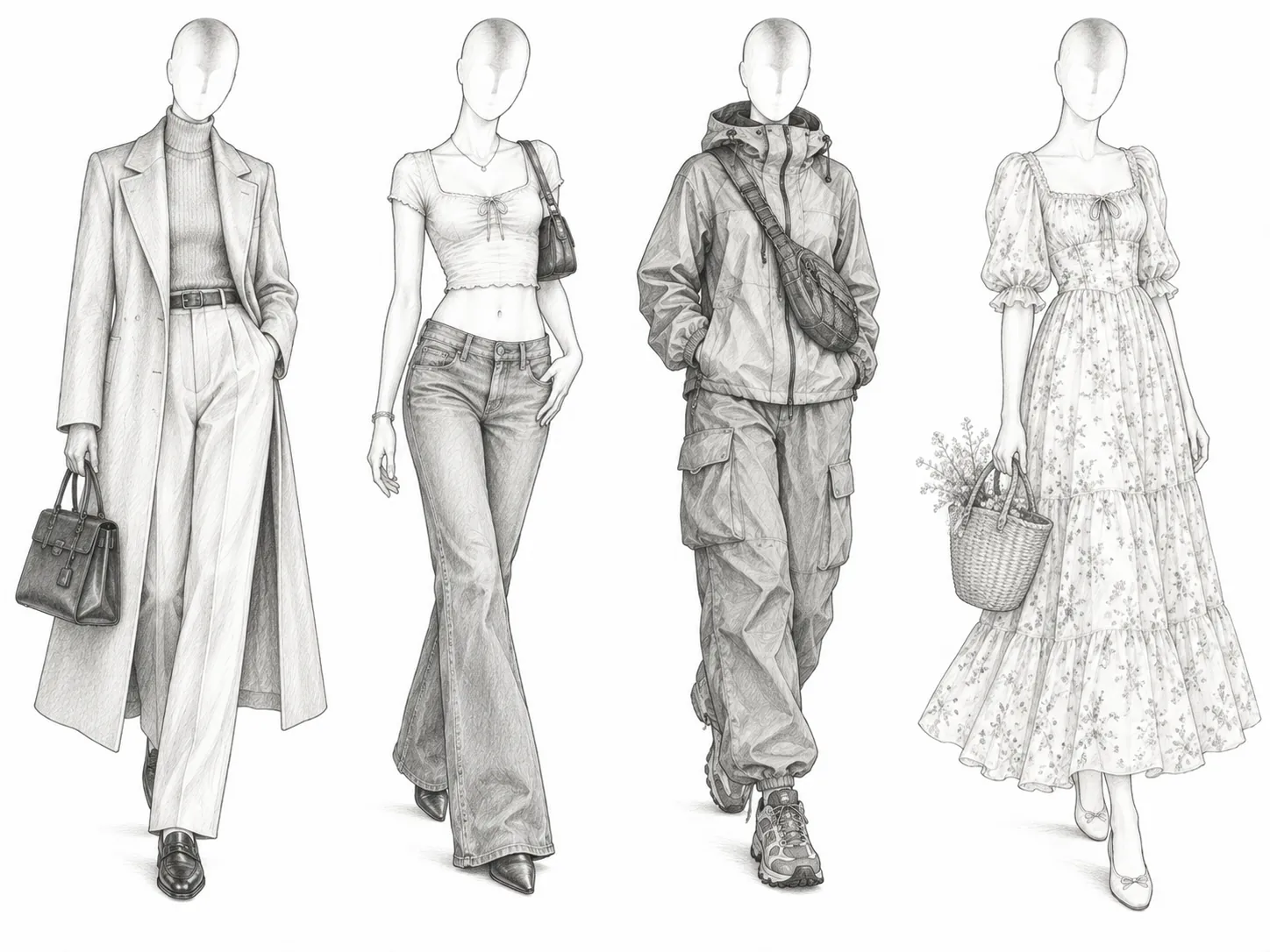
So the external fashion authority didn't really disappear — it changed shape. A magazine or fashion house used to offer one dominant silhouette per season. Now an algorithmic feed shows many parallel aesthetic codes at once and constantly swaps one for another. There's more freedom of choice, but with it comes a new pressure — the need to keep up with the next aesthetic or microtrend.
Today: the system returns, but now as a tool
The response to trend overload was a renewed interest in a more systematic approach to building a wardrobe — but now without rigid rules. The term "capsule wardrobe" appeared in the American press as early as the 1940s; in the 1970s the idea was developed by Susie Faux, owner of the London boutique Wardrobe, and in 1985 Donna Karan popularized the capsule wardrobe with her Seven Easy Pieces collection — a small set of interchangeable pieces for the working woman.
In the 21st century the idea took on a broader meaning: the system is built not around a "correct wardrobe" but around personal criteria. Marie Kondo suggested asking not "is this correct?" but whether a piece sparks joy. The same shift includes decluttering your wardrobe, cost per wear, slow fashion, personal outfit formulas, and mindful shopping.
Even recent aesthetics like quiet luxury and the underconsumption core trend reflect the same fatigue with the endless chase for the new, in different ways: the first through restraint and dropping conspicuous logos, the second through pointedly modest consumption and reusing what you already own.
So the system really has come back — but it's no longer a social code, it's a set of principles you choose for yourself. At their best, modern methods don't say "you can't wear that"; they offer tools: a capsule cuts down decisions, cost per wear helps you assess a purchase, the rule of thirds changes how proportions read, and matching your bag to your shoes can simply make an outfit look more pulled-together. You can use any of these moves if it helps solve your problem, and set it aside if it doesn't.
What changed
The history of fashion shows less a change of clothes than a change in the logic of choosing them.
- Rules became tools. What used to count as a required norm now more often works as a styling move: use it if it helps, skip it if it doesn't.
- Real life became the main reference point. Instead of one "correct" outfit, what matters more and more is the occasion, the weather, comfort, your lifestyle, your personal preferences, and the impression you want to make.
- The wardrobe became a flexible system. The same pieces can be combined differently for work, a trip, a walk, a date, or a mood — not by copying a ready-made outfit whole, but by assembling your own.
The modern approach starts not with "what's correct?" but with "what works for me and my life?"
The main principles of building outfits
Most methods can loosely be split into three big groups: color; lines, proportion, and composition; and style, context, and real life. One outfit can draw on several principles at once, but you don't have to use them all.
1. Color
The first group of principles is about working with color: how to use the color wheel, why the three-color rule helps, how to build an outfit on a neutral base with an accent, and how to account for your personal contrast.
Read more about color in outfits →
2. Proportion and composition
The second group is about the shape and structure of an outfit: fit, Kibbe types and body types, the rule of thirds and the waistline, balancing volume, the vertical line and column dressing, texture, prints, layering, the focal point, the third-item rule, and accessories.
Read more about proportion and composition →
3. Style, context, and real life
The third group is about how the principles play out in real life: appropriateness and dress codes, outfit formulas and a personal uniform, styles and internet aesthetics, the three-word method, basics with accents and capsules, cost per wear, mood, and dressing for the weather and function.
Read more about style, context, and real life →
Different cultures — different approaches to styling
Talking about "French," "Italian," or "Japanese" style easily turns into stereotypes: real people in any country dress very differently. But some cultural traditions and local fashion systems have produced interesting ways of building an outfit that you can use regardless of country.
The Italian approach: sprezzatura
Sprezzatura is "studied carelessness": the ability to hide the effort so a carefully considered outfit looks natural and effortless.
The term comes from Baldassare Castiglione's The Book of the Courtier (1528). Originally it applied not only to clothing but to a broader idea: true mastery shouldn't show how much work went into it.
In dress, this can be one deliberately relaxed detail against an otherwise polished outfit: a slightly loosened tie, a loosely folded pocket square, an unbuttoned top shirt button, or loafers without socks.
What matters here isn't the carelessness itself but the impression of effortlessness. When there are too many such moves, the outfit starts to look contrived rather than effortless.
The Japanese approach: balancing formal and casual
One Japanese formula suggests combining more formal and more casual pieces in an outfit at a ratio of about 70:30. The principle was popularized by a Japanese author and stylist writing under the pen name MB.
The point isn't counting percentages exactly but the contrast. For example, tailored trousers, a shirt, and a coat can be made less formal with sneakers; jeans and a tee, the other way around, can be pulled together with a jacket and loafers.
The formula is especially useful when an outfit comes out either too formal or too relaxed. But 70:30 isn't a universal ratio — it's a cue that emerged in a specific fashion context.
A related local idea is the Japanese one-point — a single noticeable color or decorative accent on an otherwise understated base.
The French approach: subtraction
One principle often linked to French effortless chic is not to overload an outfit. The foundation is usually understated: quality basics, minimal visible logos and decoration, one or two accents rather than a crowd of competing details.
Another characteristic move is mixing simple pieces with more expensive or expressive ones — jeans and a tee with a good jacket, a plain shirt with well-made shoes or a quality bag.
The practical principle is very simple: if an outfit feels busy, take away one extra detail and compare the result. Sometimes it's subtraction that makes an outfit more cohesive.
This isn't a universal description of how "French women dress" but a styling convention that books and fashion media popularized.
Color sandwiching: repeating a color at the top and bottom
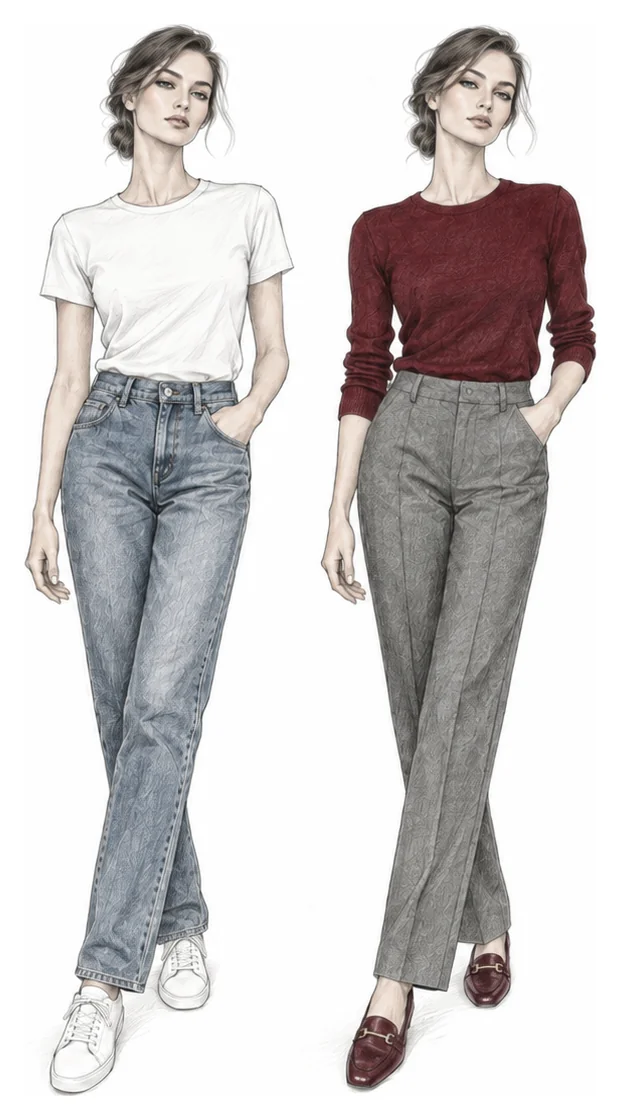
Color sandwiching is a simple move where one color repeats in the upper and lower parts of an outfit, with a different color in between.
For example:
- a white top + blue jeans + white sneakers;
- a burgundy sweater + gray trousers + burgundy shoes;
- a navy jacket + a light skirt + navy flats.
Repeating a color creates a visual link between top and bottom and helps pull together pieces that might otherwise look disconnected.
The move became especially popular on TikTok in 2022–2023; it has no single author.
It's best used as a quick way to check color cohesion, not as a required scheme: if the repeated color becomes too obvious, the outfit can start to look formulaic.
High-low mixing: combining high-end and affordable pieces
High-low mixing means combining pieces at different price points in one outfit: luxury and mass-market clothing, a designer accessory with plain jeans, an expensive coat with a basic tee.
One well-known example is Sharon Stone's Oscar looks in the 1990s, where Gap pieces were paired with clothing from pricier labels.
The point of the move is that an outfit doesn't have to be built entirely from expensive pieces to look convincing. The pieces still need to work together in terms of fit, color, material, and overall feel.
This lets you avoid building your whole wardrobe in one price bracket and invest specifically in the categories where quality or construction genuinely matters to you.
At the same time, a high price alone doesn't make a piece "better," and an affordable piece doesn't have to look as plain as possible. What matters more is how convincingly they work together.
How to build an outfit in practice
Now let's pull all the principles into one sequence.
- Define the task: the occasion, the weather, the level of formality, how much you'll be walking, and what you'll be doing.
- Choose a starting piece. It can be a favorite, a new purchase, something you haven't worn in a while, shoes, a bright accent, or a piece you'd like to wear more.
- Check fit and silhouette: volumes, lengths, the waistline, horizontal lines, the overall shape. If something isn't working, before changing the color, try tucking the top, swapping the shoes, or adding or removing a layer.
- Decide the outfit's color palette. The simplest options: a neutral base with an accent, a limited palette, monochrome, analogous shades, or a complementary accent.
- If needed, add texture or a print. If the outfit feels too plain, you don't have to add a new color — try a different material or pattern.
- Find the focus. Ask: what's the main thing here? If there's no answer, you may need an accent. If there are four answers, one element may be worth removing.
- Check the outfit in real life. The real test starts not in front of the mirror but after you leave the house. Was it comfortable? Did you keep adjusting your clothes? Did the outfit suit the situation? Did you want to wear it again?
How to tell which principles work for you specifically
Styling systems usually try to predict what will work. But if you've been logging your pieces and outfits for a few years, you have one more important source — the history of your own wardrobe.
Look at which combinations recur, which silhouettes you wear most, which colors you actually use, which pieces rarely make it into outfits, which purchases have a high cost per wear, and which pieces that are "wrong" according to theory remain favorites anyway.
Theory might say you need one contrast level, but if for years you've chosen a very different one and feel good in it, that's an important signal. Or you might think of yourself as someone who loves variety, while your wear history shows that in practice you keep coming back to three recurring formulas — jeans with a shirt and jacket, wide trousers with knitwear, a dress with a voluminous coat. That's already the basis of a personal style system.
How to use GetWardrobe to experiment with outfits
When your whole wardrobe is in front of you with no visual clutter, it's easier to see combinations and put any styling principle into practice.
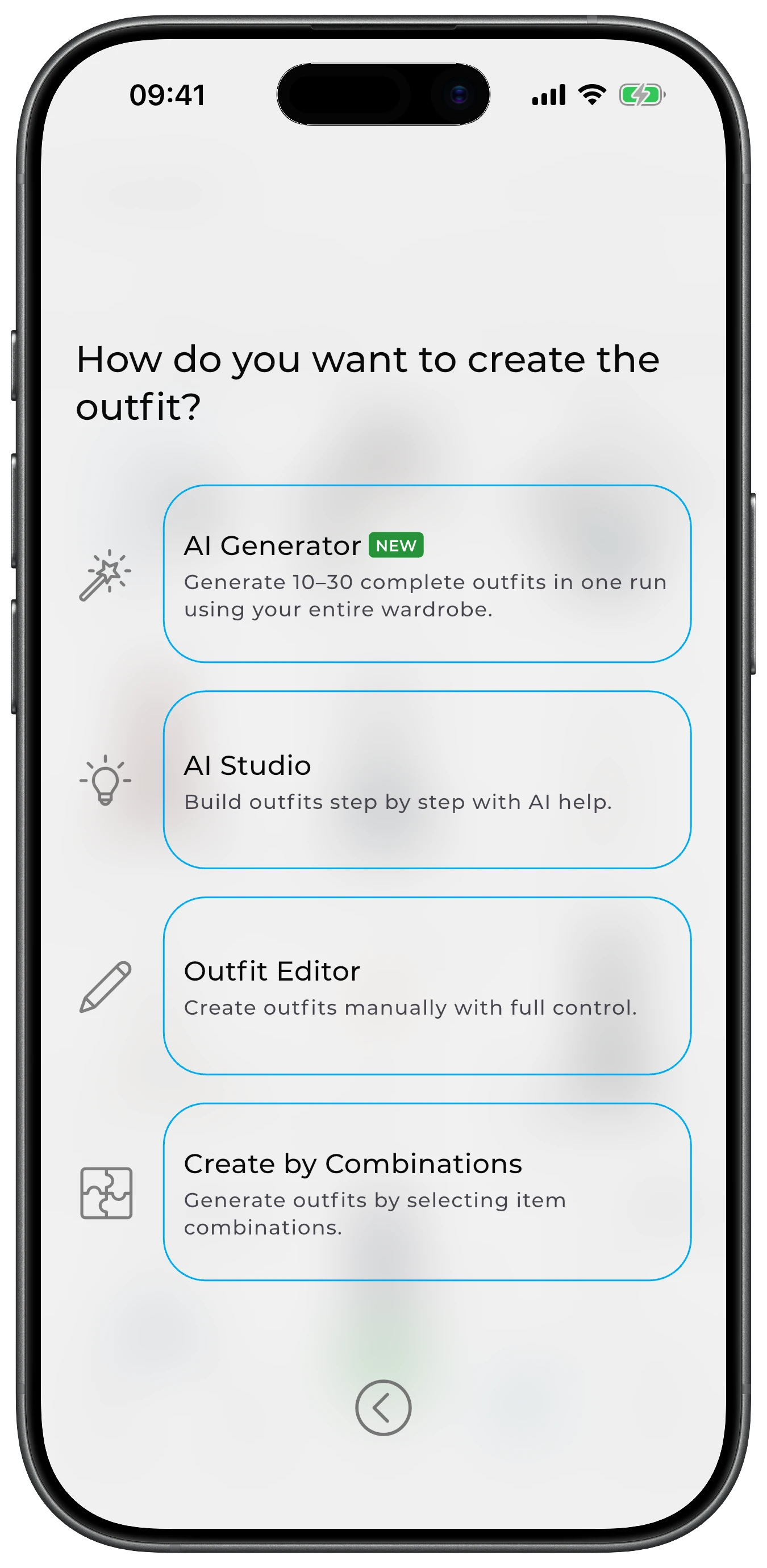
In GetWardrobe you can:
- filter your items by color, season, and more;
- look for new combinations, build them by hand, or generate outfit options from your own items with AI;
- save and plan outfits;
- build capsules;
- compare ideas with your actual wear statistics and cost per wear.
Try using the app as a lab. Take a piece you rarely wear and build five outfit ideas around it: a neutral base, a monochrome look, one with a contrasting color, one with an extra layer, and your usual go-to combination. Save them and see which outfit you actually want to wear.
Then check the result in real life. That's the real difference between the modern approach and the old rules: the final answer comes not from a book, TikTok, or a styling system, but from how well the outfit works for you.

FAQ
Are there universal rules for combining clothes?
No. Some techniques tend to produce predictable results: a limited palette, working with proportions, a single accent, coordinated textures. But you can deliberately break any of them.
Do I have to limit an outfit to three colors?
No. The three-color rule helps simplify a busy outfit, but it isn't a required limit.
Do I have to pair a voluminous top with a slimmer bottom?
No. It's one of the simplest ways to balance volume. Head-to-toe volume can work well too, as long as the shape looks intentional.
Do I need to match my bag to my shoes?
No. It's a coordination rule that was once followed much more strictly and today is just one option among many. Bag and shoes can match, pick up different colors from the outfit, or work as separate accents.
Can I mix gold and silver?
Yes. Modern styling doesn't require sticking to one metal. If the mix feels random, echo both metals elsewhere in the outfit.
Do I need to know my body type or Kibbe type?
Not necessarily. These systems can draw your attention to line, proportion, and silhouette, but fit, comfort, and the pieces you actually wear matter more for a good wardrobe.
Which matters more: your color season or your favorite colors?
You can use your color season as a working palette, especially for colors near the face. But personal preferences and real habits matter more than following a system strictly. For more, see How to find your color season and choose a palette.
How do I get better at combining clothes?
One of the best ways is to pair theory with practice. Pick one principle, put together a few options from your own pieces, photograph or save them, and compare after actually wearing them. Over time, the combinations you keep coming back to will become your own outfit formulas.
Need help?
Contact us at support@getwardrobe.com