Basic Wardrobe
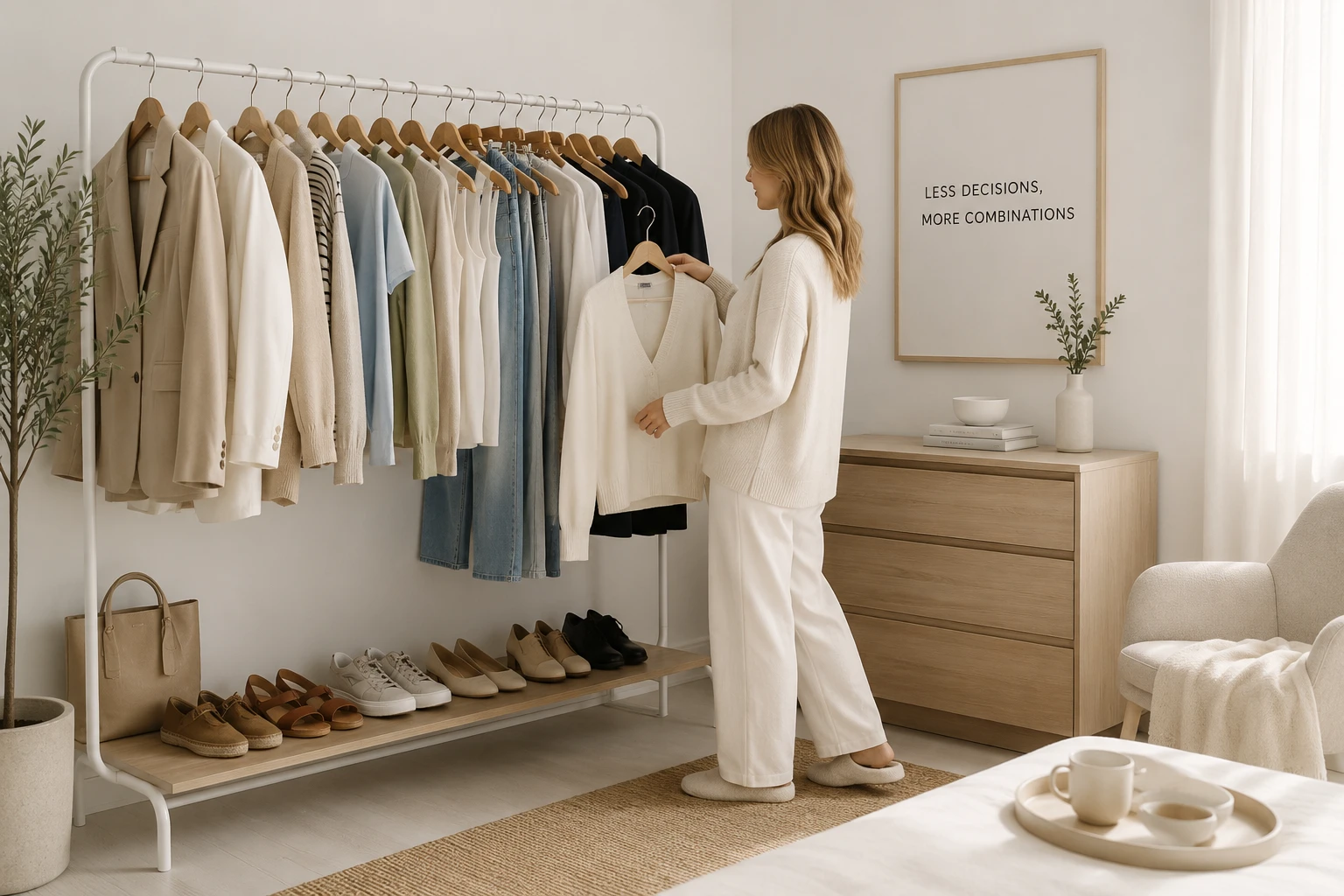
Every morning we make dozens of small decisions — and choosing what to wear can be the most exhausting one. Especially when the closet is full of clothes and there's still "nothing to wear."
A basic wardrobe solves this through versatility and intentionality. It's not just a set of clothes — it's a system where every piece works with the rest.
Imagine picking your favorite jeans, adding a shirt that pairs with them, and finishing with a light blazer. Simple, stylish, and fast.
This article covers how to build a basic wardrobe for your lifestyle, and how GetWardrobe makes the process easier.
Basic Wardrobe vs. Capsule Wardrobe — What's the Difference?
These terms often get used interchangeably, but they're not quite the same:
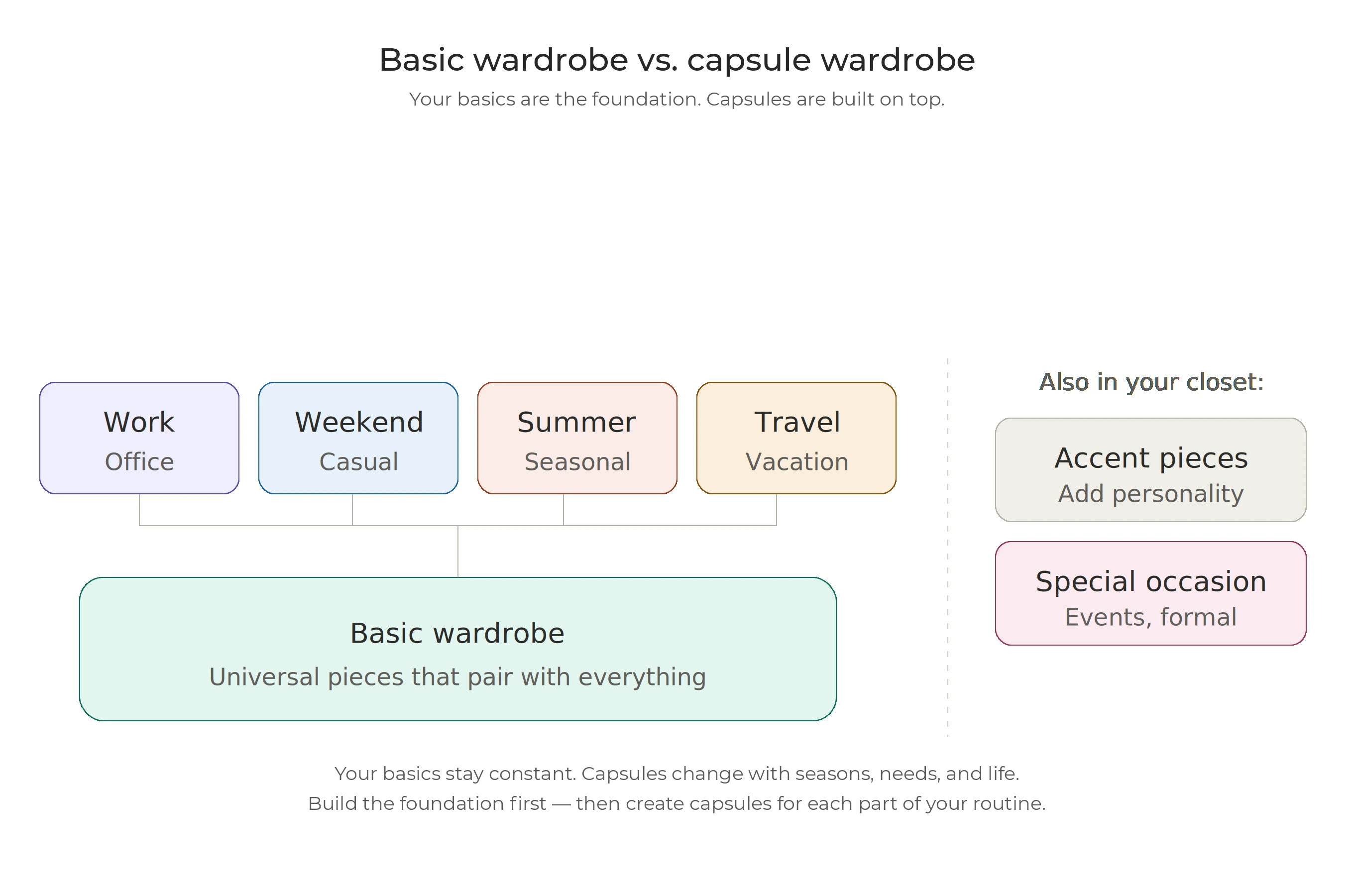
- A basic wardrobe is your foundation — universal, versatile pieces that pair well with almost anything and serve as the starting point for all your outfits.
- A capsule wardrobe is a smaller, curated collection (often seasonal or purpose-driven) where every item works together within a defined set.
Think of it this way: your basic wardrobe is the foundation of a house. A capsule is a room you build on top of it.
Benefits of a Basic Wardrobe
- Save time. Less time choosing what to wear each morning.
- Shop smarter. A mindful approach to adding new pieces — no duplicates, no impulse buys.
- Feel confident. Harmonious combinations you trust every day.
Key Principles
The approach rests on four pillars:
Versatility
Every piece in a basic wardrobe should pair with at least five others. This lets you create many outfits without buying anything new.
Quality
Durability matters more than quantity. Better to own a few high-quality pieces that last for years than many cheap ones.
Minimalism
Fewer pieces, more combinations. There's no fixed "correct" set of basics — it depends on your climate, lifestyle, and preferences.
Individuality
Your basic wardrobe should reflect your personal style — not just consist of neutral tones.
Organization Is Part of the System
The best wardrobe in the world doesn't help if you can't see what you have. Keeping things organized — whether physically or digitally — is what makes the whole system click.
This is why many people buy duplicates, forget about clothes they already own, or keep wearing the same outfits. Visibility is what turns a collection of clothes into a working wardrobe.
Step-by-Step Process
1. Define your lifestyle
Analyze how you spend your time:
- Work and professional activities
- Sports and active leisure
- Social time and meeting friends
- Home and downtime
Your wardrobe should reflect how you actually spend your time, not how you imagine your life. This shows you which types of clothes you need most.
2. Audit your wardrobe
Categorize what you already own:
- Outerwear (coats, jackets)
- Tops (t-shirts, blouses, sweaters)
- Bottoms (pants, skirts, shorts)
- Dresses
- Shoes
- Accessories
You'll see which categories are well-represented and which need filling out.
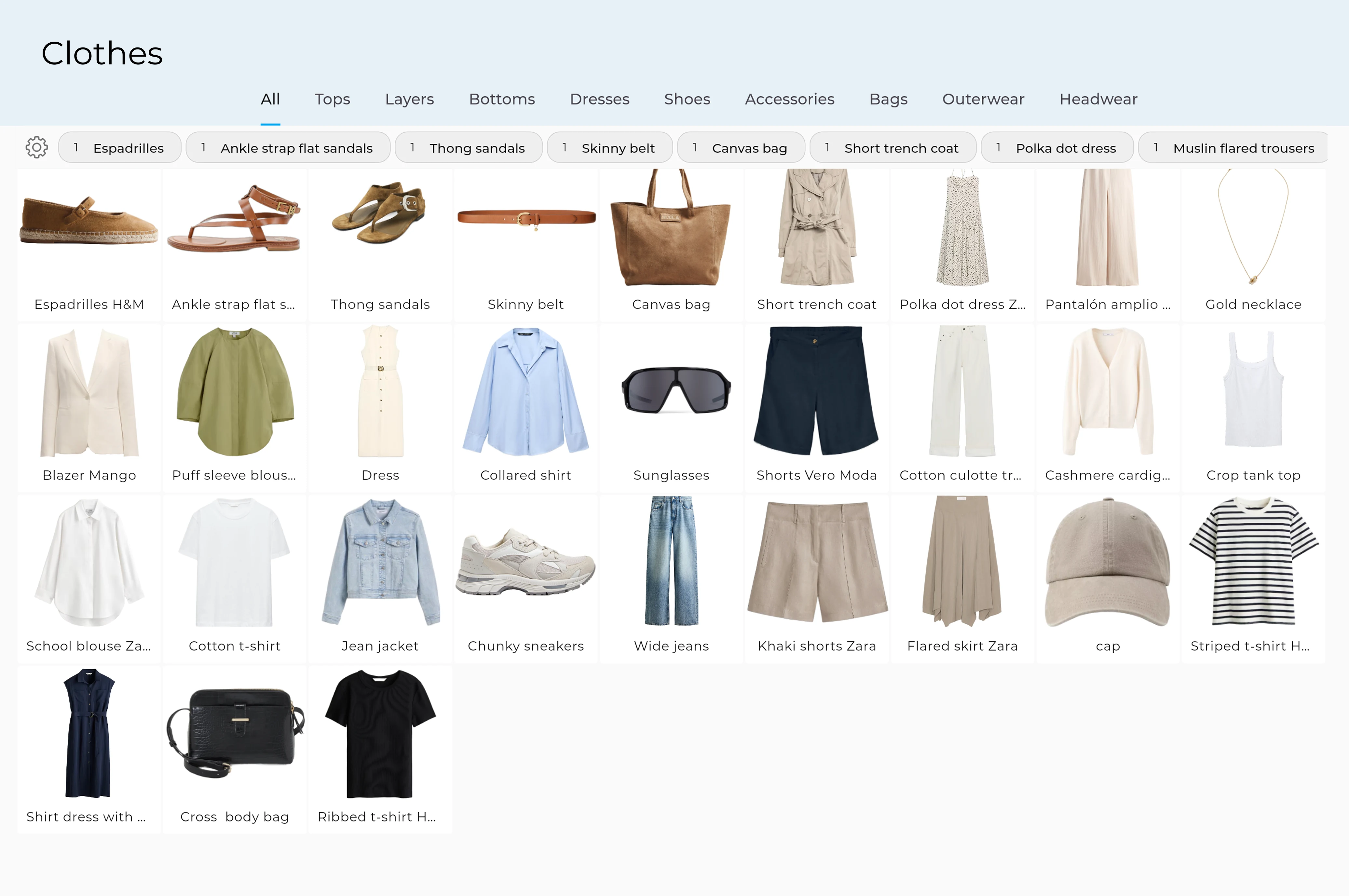
This is where a digital wardrobe becomes useful. Seeing everything in one place makes it much easier to spot gaps, duplicates, and combinations.
3. Choose your color palette
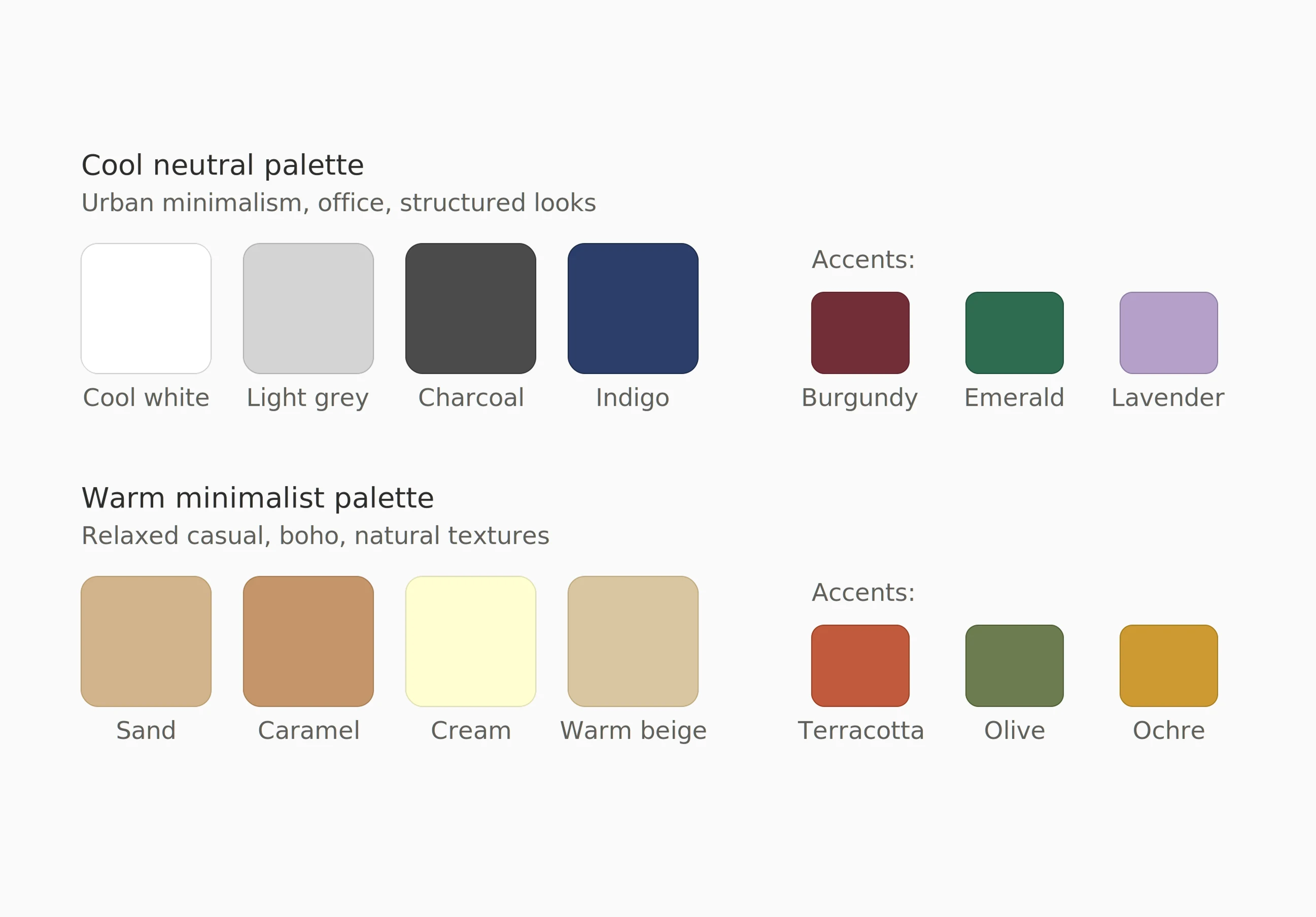
Pick harmonious shades that you like and that suit your complexion. A working palette usually includes:
- 2-3 neutral base colors (white, grey, black, beige, brown)
- 2-3 additional or accent colors
Two working schemes — a cool neutral palette and a warm minimalist one:
4. Define your style
Build a moodboard and experiment with different combinations. Which style is closest to you:
- Classic — elegant and restrained
- Casual — comfortable and easy
- Boho — romantic and free
- Sporty — active and dynamic
- Romantic — soft and feminine
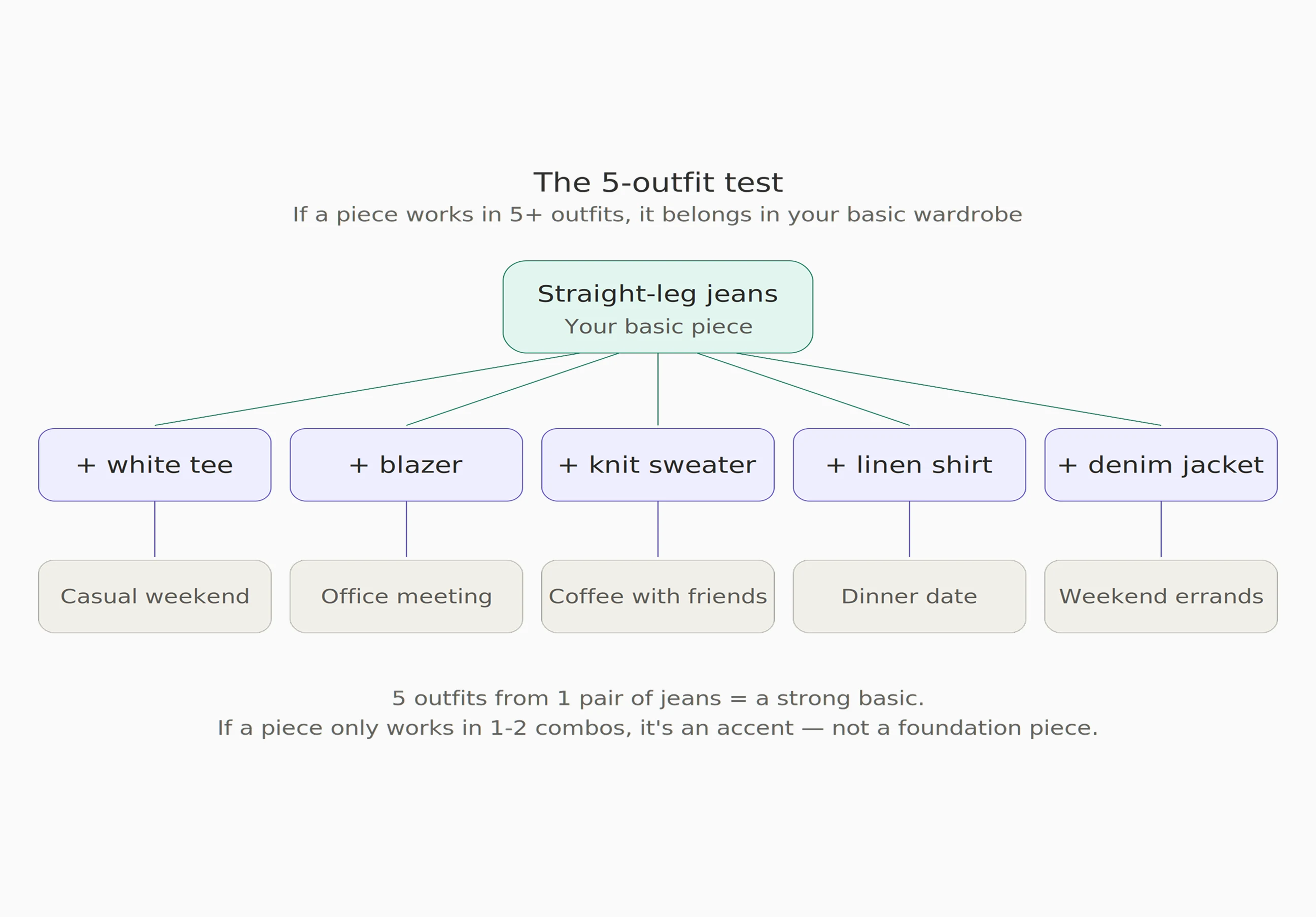
The 5-Outfit Test (Before You Buy)
The easiest way to avoid impulse purchases is to test new pieces against your existing wardrobe before buying.
Before buying a new piece, ask yourself one question: "How many outfits can I make with this?"
If the answer is at least 5 different combinations using what you already own, it's a strong basic. If only 1-2 — it's an accent, not a foundation.
Seasonal Wardrobe Examples
A basic wardrobe changes with the season, but the principles stay the same — versatile pieces that pair well together.
Summer: light tops and dresses, breathable bottoms, comfortable sandals, a hat, sunglasses.
Winter: a coat or down jacket, warm sweaters, durable boots, a scarf, hat, and gloves.
For in-between seasons, layer pieces from both — a light sweater under a jacket, a long cardigan over a shirt.
Start Right Now
You don't need to overhaul your wardrobe in one evening. Start small — with what you already wear.
Upload 5-7 pieces to GetWardrobe that you wore this week. It's the easiest way to get into a rhythm — and feel the order kick in right away.
Then, step by step, add the rest.
How GetWardrobe Helps Build a Basic Wardrobe
If you want to bring order to your closet, see your full wardrobe at a glance, and easily build outfits — GetWardrobe is your tool.
With it, you can:
- Audit your closet: upload items, organize by category and season
- See how many outfits you have for work, leisure, sport, and going out
- Spot missing pieces and duplicates
- Analyze your wardrobe's color palette
- Build capsules and outfits — manually or with AI
- Draw inspiration from the community
- Keep a shopping list
- Manage not just your wardrobe, but your whole family's
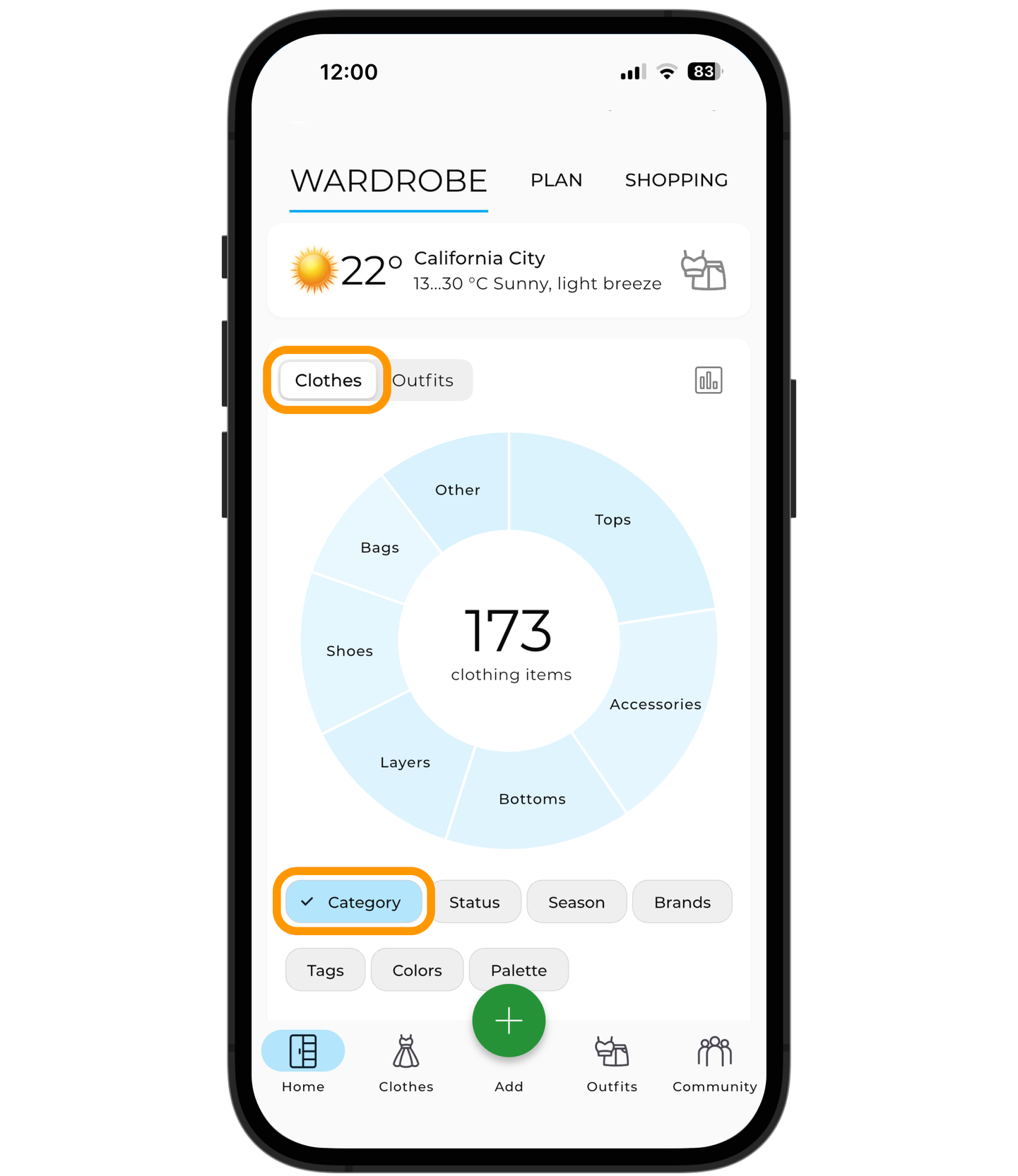
Once items are categorized, the app shows you the structure of your wardrobe at a glance — how many items you have in each category, where the gaps are.
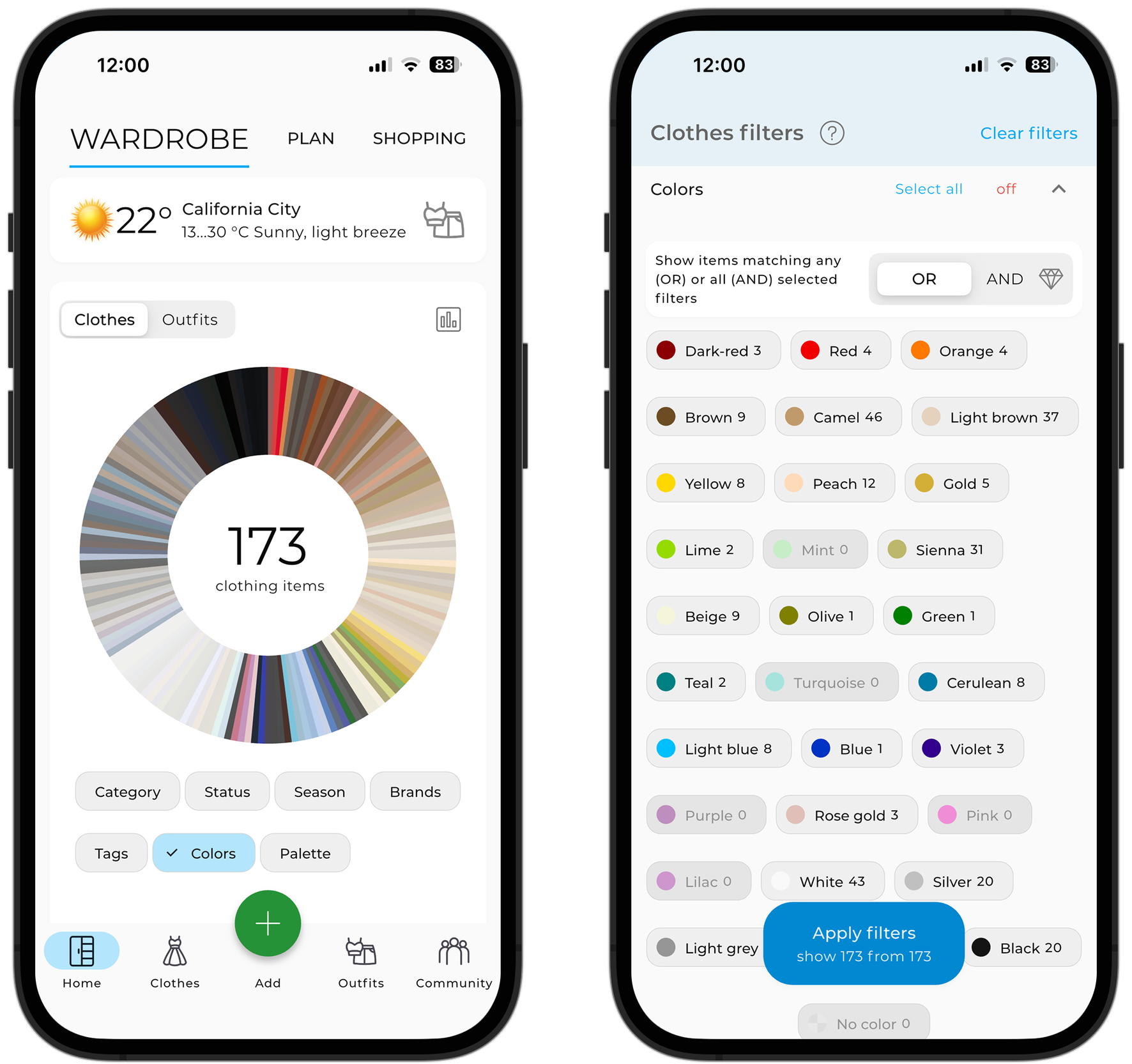
It also breaks down your wardrobe by color so you can see your actual palette and filter items by shade.
Get Started
Download the GetWardrobe app and start building your ideal basic wardrobe. The app helps you organize, analyze, and visualize your closet.
Download GetWardrobe — free for iOS, Android, and Web
FAQ
What is a basic wardrobe?
A basic wardrobe is a versatile collection of items that mix and match easily to create many everyday outfits. Every piece works well with the rest, built on principles of versatility, quality, minimalism, and individuality.
How many items do I need for a basic wardrobe?
There's no exact number — it depends on your climate and lifestyle. A summer wardrobe usually includes around 32 items; a winter one can be larger. The key is that each piece should pair with at least five others.
How do I know if a piece belongs in my basic wardrobe?
Run the 5-outfit test. If a piece works in five or more combinations with what you already own, it's a strong basic. If it only works in one or two, it's an accent — not a foundation piece.
Can I customize the basic wardrobe list?
Yes. Your basic wardrobe should reflect your personal style and lifestyle. Consider your work, activities, climate, and body type when choosing which items to include.
Need help?
Contact us: support@getwardrobe.com